
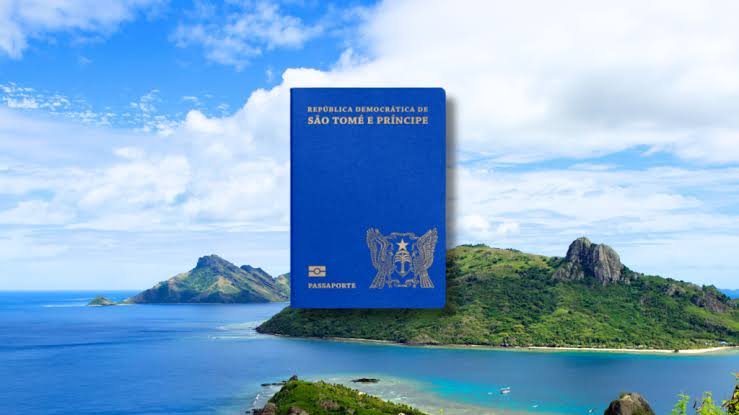
Among the handful of countries offering a direct path to a second passport in exchange for investment, São Tomé and Príncipe Citizenship has emerged as the most talked-about new entrant in the field. Launched in August 2025, the program combines the lowest minimum contribution of any active citizenship-by-investment scheme with processing times that, in the best cases, beat every established Caribbean program. For applicants who’ve watched citizenship-by-investment options shrink and get more expensive over the past two years, that combination is worth understanding properly — including the parts of the program that are still settling as it moves through its first full year of operation.
This guide covers how the program works, what it actually costs, who qualifies, how it compares to the more established alternatives, and what to watch for given that it’s still a relatively young program as of August 2026.
What the Program Is
São Tomé and Príncipe is a small island nation off the west coast of Central Africa, a former Portuguese colony and now one of only two African countries offering economic citizenship. The program was formally established under Decree-Law No. 07/2025 and opened to applications on August 1, 2025. It’s a donation-based route: rather than requiring a real estate purchase or business investment, applicants make a single, non-refundable contribution to the country’s National Transformation Fund, which the government directs toward national development priorities — renewable energy, infrastructure, housing, education, and sustainable tourism have all been cited as funding targets.
In exchange, successful applicants and their included family members receive full São Tomé and Príncipe citizenship and a passport — not a residency permit, and not a pathway that requires years of waiting. This is citizenship granted directly, which puts it in the same broad category as long-established Caribbean programs (St Kitts and Nevis, Antigua and Barbuda, Dominica, Grenada, St Lucia) and Vanuatu in the Pacific, rather than in the residency-first category that most European “Golden Visa” programs now occupy.
The Cost
The headline figure is a minimum non-refundable contribution of $90,000 to the National Transformation Fund for a single applicant, with the total scaling up for a family of four and beyond. On top of the core contribution, applicants should budget for a government submission fee (commonly cited around $5,000) and professional service fees if working with a licensed agent to prepare and coordinate the application, which most applicants do given the program’s remote, documentation-heavy structure.
For context, that $90,000 entry point sits meaningfully below Vanuatu’s roughly $130,000 threshold and below the $200,000-plus starting points typical of the established Caribbean programs. As of mid-2026, it’s generally regarded as the least expensive legitimate citizenship-by-investment route available anywhere.
How the Process Actually Works
The application model is approval-first: applicants submit documentation and undergo government due diligence before the core financial contribution is due. In practice, that means the sequence looks roughly like this:
- Engage a licensed agent or the program’s Citizenship Investment Unit. The program is operationalised through a Citizenship Investment Unit headquartered in Dubai, UAE — a deliberate choice that gives international applicants a familiar, accessible point of contact without needing to travel to São Tomé at any stage of the process.
- Submit documentation for due diligence. This includes standard identity, background, and source-of-funds documentation. Notably, the program has taken a permissive stance on cryptocurrency as an acceptable source of funds, provided the actual contribution payment is made in US dollars and the funds’ origin is clearly documented and traceable.
- Receive approval-in-principle. Only after this stage is the main contribution due — applicants aren’t paying the full amount speculatively before knowing whether they’ll clear due diligence.
- Make the contribution and complete biometric verification. As of an April 2026 rule update, biometric verification can now be completed remotely via a video call with a local notary, removing what had previously been a more involved verification step. There’s no in-person interview, no language or history test, and no requirement to travel to São Tomé and Príncipe at any point in the process.
- Receive citizenship and passport. The completed passport is delivered by courier.
Processing time is one of the program’s strongest selling points. Due diligence alone typically runs around two to two-and-a-half months, and total time from application to passport in hand generally falls somewhere in the four-to-six-month range, with the fastest documented cases closer to one to two months. That puts it on par with or faster than most Caribbean alternatives, several of which have seen processing times lengthen as due diligence standards have tightened across the industry.
Who Can Apply
The program takes a broad view of family inclusion. Alongside the primary applicant, the following can typically be included in a single application:
- A spouse, including de facto or civil partners in many cases.
- Dependent children — unmarried and generally under an upper age limit (commonly cited around 30, subject to program terms).
- Parents and grandparents, without the strict age-based dependency requirements that some other programs impose.
Family members can also be added after the fact — a new spouse or child, for instance — typically for a reduced fee relative to a fresh standalone application.
Eligibility is open to applicants of essentially any nationality, with one notable exclusion: North Korean nationals are not eligible. There is also a more recent restriction worth flagging: as of an operational update introduced in 2026, the program has temporarily suspended applications from individuals holding three or more existing citizenships. Applicants in that position should confirm current eligibility directly before beginning the process, since this kind of operational adjustment is the sort of detail that can change again as the program matures.
What the Passport Actually Gets You
A São Tomé and Príncipe passport currently provides visa-free or visa-on-arrival access to a meaningful, though not sweeping, range of destinations — figures cited across sources generally fall in the low-to-mid sixties, including destinations such as Hong Kong and South Africa. It also carries privileges within the Community of Portuguese Language Countries (CPLP), a bloc that includes Portugal, Brazil, Angola, Mozambique, and several other Portuguese-speaking nations — a genuinely distinctive benefit for applicants with existing ties or interests in that linguistic and economic community.
It’s worth being direct about where this passport sits relative to premium options: it isn’t a substitute for an EU or major Western passport in terms of visa-free reach, and applicants motivated primarily by maximising travel freedom should compare the specific visa-free country list against their existing passport before assuming a meaningful upgrade. Where the program’s value proposition is strongest is elsewhere — as an affordable second citizenship for diversification, as a plan-B option independent of one’s primary nationality, and for applicants for whom CPLP-bloc access or the specific cost-to-speed ratio genuinely matters more than raw visa-free country counts.
São Tomé and Príncipe also permits dual citizenship, meaning applicants generally aren’t required to renounce their existing nationality to participate — though, as with any citizenship application, it’s worth confirming how a second citizenship interacts with the rules of one’s home country specifically, since not every country treats dual nationality the same way.
How It Compares to Other Citizenship-by-Investment Programs
| Program | Minimum contribution | Typical processing time | Travel required | Passport strength (approx. visa-free access) |
|---|---|---|---|---|
| São Tomé and Príncipe | ~$90,000 | ~2–6 months | None | ~60+ countries |
| Vanuatu | ~$130,000 | ~1–2 months | None | ~90+ countries |
| Caribbean programs (St Kitts, Dominica, etc.) | ~$200,000+ | ~4–6+ months | Generally none | ~140+ countries |
Figures are program minimums and general reference points as of 2026; they exclude government fees, professional service fees, and due diligence charges, and should be independently verified with a licensed agent before any application.
The pattern that emerges is fairly clear: São Tomé and Príncipe wins decisively on cost, competes well on speed, and trades away some passport strength relative to the more established, more expensive Caribbean options. Whether that trade-off makes sense depends entirely on what an applicant is actually optimising for — outright travel privileges, affordability, processing speed, or some combination.
What to Watch, Given the Program’s Age
Any program in its first full year of operation carries a different risk profile than one that’s been running for a decade, and this one is worth approaching with that context in mind, not out of alarm but out of ordinary diligence:
- The program is still operationally evolving. Rule changes have already occurred within the first year — the shift to remote biometric verification and the temporary suspension of applications from holders of three or more citizenships both happened well after the program’s initial launch. That’s not unusual for a new scheme, but it does mean current terms should always be confirmed directly rather than assumed static.
- Application volumes and issuance numbers are still modest. Public figures cited for the program’s first several months show applications numbering in the low hundreds and passports actually issued numbering in the dozens. That’s consistent with a genuinely new program building a track record, but it’s a different position than a Caribbean scheme with years of issued passports and demonstrated visa-free agreements to point to.
- International scrutiny of citizenship-by-investment as a category has increased broadly. Across the industry — not specific to this program — due diligence standards, EU attention to visa-free arrangements tied to CBI passports, and general regulatory pressure have all intensified over the past two years. That context is worth factoring into any long-term expectations about how favourably any CBI passport, including this one, will continue to be treated by other governments.
None of this is a reason to dismiss the program — it reflects genuine due diligence infrastructure and a real, functioning application pipeline — but it’s a reason to work with a licensed, reputable agent, to verify current rules directly rather than relying on older articles, and to treat marketing claims about processing speed and passport strength as figures to confirm rather than guarantees.
Frequently Asked Questions
Is São Tomé and Príncipe citizenship the cheapest in the world? Among currently active, legitimate citizenship-by-investment programs, yes — its $90,000 minimum contribution sits below Vanuatu and well below the established Caribbean programs as of 2026.
Do I need to travel to São Tomé and Príncipe to apply? No. The entire process, including biometric verification since an April 2026 update, can be completed remotely, and the completed passport is delivered by courier.
Can I keep my current citizenship? São Tomé and Príncipe permits dual citizenship, so applicants generally don’t need to renounce an existing nationality — though whether your home country allows dual citizenship is a separate question worth confirming independently.
Who can be included in my application? Typically a spouse (including de facto or civil partners in many cases), dependent children up to a specified age, and parents and grandparents, with additional family members addable later for a reduced fee.
How long does the process take? Due diligence generally runs around two to two-and-a-half months, with total time to passport typically in the four-to-six-month range, and the fastest documented cases closer to one to two months.
Is anyone excluded from applying? North Korean nationals are excluded. As of a 2026 update, applications from individuals holding three or more existing citizenships have also been temporarily suspended — current eligibility should be confirmed directly given this is a recent, program-specific restriction.
The São Tomé and Príncipe program has carved out a genuinely distinct position in the citizenship-by-investment landscape: the lowest entry cost of any active program, competitive processing speed, a fully remote application process, and a passport that trades some travel-privilege strength for accessibility. For applicants prioritising affordability and speed over maximising visa-free reach, that combination is hard to match elsewhere in 2026. As with any program still in its first full year of operation, the sensible approach is the same one that applies to any serious citizenship decision — work with a licensed agent, confirm current terms directly rather than relying on older summaries, and weigh the program’s youth honestly against its genuine advantages rather than treating either the risk or the opportunity as the whole story.
Disclaimer: This article is for general informational purposes only and does not constitute legal, immigration, financial, or tax advice. Citizenship by investment program requirements, costs, and eligibility criteria are set by the government of São Tomé and Príncipe, are subject to change, and have already been revised more than once since the program’s 2025 launch. Before making any contribution or submitting an application, verify current requirements directly with the relevant government authority or a licensed citizenship-by-investment agent. Nothing in this article should be relied upon as a substitute for professional advice specific to your circumstances.